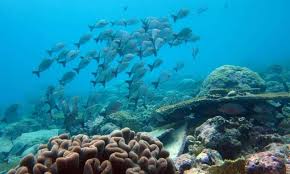
Photo Courtesy: phys.org
The marine environment supplies many ecosystems that support biodiversity in coastal and open ocean habitats. Marine ecosystems provide many resources that are beneficial to society and a significant proportion of the world’s population depends intimately on the oceans and coasts for survival and well-being. The pressure on marine ecosystems and the resources they provide is increasing as threats introduced by land-use change, overfishing, climate change, the invasion of non-native species and other impacts of anthropogenic activities affect biodiversity. As environmental conditions change, species need to evolve and adapt to these changing conditions. Healthy marine ecosystems are important for society since they provide services including food security, feed for livestock , raw materials for medicines, building materials from coral rock and sand, and natural defenses against hazards such as coastal erosion and inundation.
Ocean observations that monitor biodiversity and measure species distribution and density in marine ecosystems enable policy makers to respond to, protect and manage ecosystems that are under threat. Marine ecosystems are integrally linked to global climate and monitoring and studying these ecosystems allows scientists to better predict the impact of climate change on biodiversity and human populations.
Marine Biodiversity is a peer-reviewed international journal devoted to all aspects of biodiversity research on marine ecosystems. The journal is a relaunch of the well-known “Senckenbergiana maritima” and covers research at gene, species and ecosystem level that focuses on describing the actors (genes and species), the patterns (gradients and distributions) and understanding of the processes responsible for the regulation and maintenance of diversity in marine systems. Also included are the study of species interactions (symbioses, parasitism, etc.) and the role of species in structuring marine ecosystem functioning.
Biodiversity can be defined in several ways, but it generally refers to the number of species types in a particular ecosystem. Marine biodiversity therefore refers to the species richness and abundance in the world’s oceans and seas. And since the world is covered with approximately 70% water, the amount of life in the oceans is enormous.
Marine biodiversity is important to protect because today, just as always, humans are dependent on the Earth’s resources for their livelihood, health and well being In Belize, efforts have been made to conserve the incredible biodiversity that exists in the country. In addition to seasonal closures and catch limits on some fishery products, many national parks and marine reserves have been established in an effort to protect these natural areas. Having diverse ecosystems makes organisms and systems more resilient to changes. Ecosystems that are more resistant are able to then continue to provide the following benefits:
- Protection of water resources (e.g. Mangrove forests trap silt)
- Nutrient Storage and Cycling
- Pollution Breakdown and Absorption
- Contributes to Climactic Stability
- Recovery from unpredictable events (e.g. hurricanes)
- Food
- Medicinal Resources
- Recreation
Major threats to marine and coastal ecosystems include coastal development, global climate change, invasive species, overfishing and pollution. There is growing concern that a large number of marine species may be under threat of extinction due to the convergence of these threats. Overfishing is considered to be the greatest threat to marine wildlife and habitats. Corals are a necessary habitat for large numbers of species of fish and invertebrates that utilize the various ecosystems in the ocean. Over 27% of corals, however, have been listed as threatened in the most recent assessment of the world’s marine species in the IUCN Red List. In the same study, 25% of marine mammal species were found to be threatened. Marine mammals include cetaceans (dolphins, porpoises and whales), manatees, pinnipeds (seals, sea lions, and walruses), polar bears and sea otters. Major threats to these species include boat strikes, entanglements in fishing gear, and environmental pollution. And over 27% of the world’s seabirds are threatened by factors that include death in long-line fisheries and gill-nets, invasive species, and oil spills.
Reference and Citation ( External Link Included)
1. Blue Planet, Oceans and Society, a CEO initiative (https://geoblueplanet.org/biodiversity-ecosystems/)
2. Casado Internet Group, Belize (https://ambergriscaye.com/reefbriefs/briefs77.html)
3.Springer Link (https://link.springer.com/journal/12526)
4.U.S Department of State (https://www.state.gov/e/oes/ocns/opa/biodiversity/)
