EARTH DARK AGE ERA: ILLEGAL MINING

Photo Courtesy: economicconfidential.com

Destructive cases of illegal mining across the world

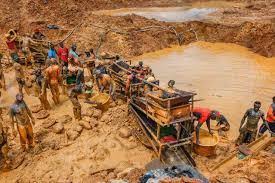
In South America, the $2.4 billion illegal gold mining industry has been destroying the Amazon and costing dozens of lives. In Peru, Bolivia, and Colombia, illegal gold mining operations by private companies have devastated local communities. The operations have left behind pools of cyanide and mercury, twice the size of Olympic swimming pools. In just three months, the illegal mining activities damaged the ecosystem by killing the entire fish population of the Aguita River after water-pumping machines leaked toxins into the water.

According to Colombia’s National Planning Department, Colombia now ranks second in the world for mercury pollution. Local populations have reported health issues related to mercury poisoning such as tremors and memory loss. According to some sources, illegal mining companies often extorted the local populations by forcing them to search for gold by sending in armed groups to intimidate them. Other times, they tried to barter deals by promising to repair crippling infrastructure in the region, but instead, pillaged the region and left without keeping their word. South America isn’t the only region that has suffered from illegal mining.In Africa, the conflict diamond industry cost thousands of lives in the 1990’s and 2000’s. During that time, the illegal industry produced billions of dollars which were used to fund civil wars that decimated countries including Sierra Leone, Angola, Liberia, Ivory Coast and the Democratic Republic of Congo (DRC).

Reference and Citation: Greentumble

(https://greentumble.com/the-dangerous-effects-of-illegal-mining/)

Mining can be defined as “the extraction of minerals and other geological materials from the earth.” Minerals and materials commonly targeted by mining include: base metals (e.g., copper, nickel), precious metals (e.g., gold, silver), iron, uranium, coal, diamonds, limestone, oil shale, rock salt, and potash. The activity is deeply entwined with human history, with the oldest known mine dating back to over 40,000 years ago.

Mining is widely recognized as carrying significant risks of ecosystem destruction, environmental pollution, and worker injury, so “illegal mining” can be defined statutorily as violations of both specialized laws and regulations for mining, and more general laws and regulations that protect the environment and human welfare.  From a more biocentric or ecocentric philosophical perspective, even statutorily legal mining might be considered a crime as minerals and other geological materials are nonrenewable, their mining can seriously impact the environment, and many minerals and materials are not recycled, even though they often can be. However, for the rest of this primer, I’ll just consider ‘illegal mining’ from a statutory, rather than philosophical, perspective.

Reference and Citation:  Sustainably Enforced

Writer credits: Mark Gibson ( In-Focus:Illegal Mining Around the Globe)

(https://www.sustainablyenforced.org/news-and-analysis/globalillegalmining)

Adorning oneself with jewelry especially gold has been consistent across religions, cultures, class and gender. Unquestionably humans have a need for jewelry, but what precisely is this need?

Jewelry has served as a store of value to be converted to cash in times of need.Many individuals, institutions and countries across the world hold investments in gold bullion as financial backing.

Mining involves the activity, occupation and industry concerned with the extraction of minerals from the earth.

From electronic manufacturing companies to dental rooms gold and other precious metals are being used for various purposes. Gold has a positive impact on a nation’s GDP and it also create job opportunities for the community.In Ghana,the Mining industry accounts for 5% of the country’s GDP and minerals takes up 37% of the total export with gold accounting for 90% of the mineral export. Ghana is the second largest gold producer in Africa.

Notwithstanding the fact that the mining sector contributes to government revenue it also has serious negative impact on the environment and to miners.

The illegal mining sector in Ghana is plagued by several environmental and health problems. Several accidents have occurred and in some cases this has led to fatalities in the mines. In April 2013, at least 17 people were killed while mining illegally at a disused gold mine in Ghana’s central region. The ground caved in on the miners as they searched for gold deposits. Another serious impact is the health hazards as a result of pollution from gases, noise, dust and polluted water.

Coal mines release methane which can pollute the air.Sulphuric acid are utilized in the mining operations which drain into the water bodies, and adversely affect ground water. The movements of rock in the case of surface mining impact the land negatively. Craters are left in the areas where mining activities took place, destroying landscape and lush vegetation in the process. Deforestation is resulting in changes in the ecosystem which includes increasing the levels of Carbon Dioxide in the air.

Reference (External Link) (https://www.eoi.es/blogs/mavisasare/2014/01/14/illegal-mining-and-the-environment-%E2%80%93-ghana/)
AIR POLLUTION AND ITS EFFECT IN THE HUMAN HEALTH

Photo Courtesy: medicaldaily.com

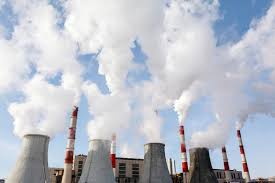
Air pollution is a mix of particles and gases that can reach harmful concentrations both outside and indoors. Its effects can range from higher disease risks to rising temperatures. Soot, smoke, mold, pollen, methane, and carbon dioxide are a just few examples of common pollutants. In the U.S., one measure of outdoor air pollution is the Air Quality Index, or AQI which rates air conditions across the country based on concentrations of five major pollutants: ground-level ozone, particle pollution (or particulate matter), carbon monoxide, sulfur dioxide, and nitrogen dioxide. Some of those also contribute to indoor air pollution, along with radon, cigarette smoke, volatile organic compounds (VOCs), formaldehyde, asbestos, and other substances.

Though many living things emit carbon dioxide when they breathe, the gas is widely considered to be a pollutant when associated with cars, planes, power plants, and other human activities that involve the burning of fossil fuels such as gasoline and natural gas. That’s because carbon dioxide is the most common of the greenhouse gases, which trap heat in the atmosphere and contribute to climate change. Humans have pumped enough carbon dioxide into the atmosphere over the past 150 years to raise its levels higher than they have been for hundreds of thousands of years. Other greenhouse gases include methane —which comes from such sources as landfills, the natural gas industry, and gas emitted by livestock—and chlorofluorocarbons (CFCs), which were used in refrigerants and aerosol propellants until they were banned in the late 1980s because of their deteriorating effect on Earth’s ozone layer.

Another pollutant associated with climate change is sulfur dioxide, a component of smog. Sulfur dioxide and closely related chemicals are known primarily as a cause of acid rain. But they also reflect light when released in the atmosphere, which keeps sunlight out and creates a cooling effect. Volcanic eruptions can spew massive amounts of sulfur dioxide into the atmosphere, sometimes causing cooling that lasts for years. In fact, volcanoes used to be the main source of atmospheric sulfur dioxide; today, people are. Airborne particles, depending on their chemical makeup, can also have direct effects separate from climate change. They can change or deplete nutrients in soil and waterways, harm forests and crops, and damage cultural icons such as monuments and statues.

Main causes of air pollution Emissions from different transport modes, the burning of fossil fuels, industrial production, forest fires, aerosol use and radiation fare some of the main causes of air pollution. Such sources of emissions liberate gases and substances that are toxic for human beings, the most harmful of which are: tropospheric ozone (O3), sulphur dioxide (SO2), nitrogen dioxide (NO2), benzo(a)pyrene (BaP) and suspended particulate matter (PM).   How does air pollution affect our health? Our physical and psychological wellbeing is affected differently by the kind of air pollution we are exposed to. There are many organs and bodily functions that can be harmed, the consequences including: Respiratory diseases Cardiovascular damage Fatigue, headaches and anxiety Irritation of the eyes, nose and throat Damage to reproductive organs Harm to the liver, spleen and blood Nervous system damage.

Reference and Citations (External Link Included)

1. National Geographic (www.nationalgeographic.com/environment/global-warming/pollution/)

2.Sustainability for all ( https://www.activesustainability.com/environment/effects-air-pollution-human-health/)

INDUSTRIALIZATION AND ITS EFFECT IN THE ENVIRONMENT

Photo Courtesy: creator-kodda,copyright- michal kodym

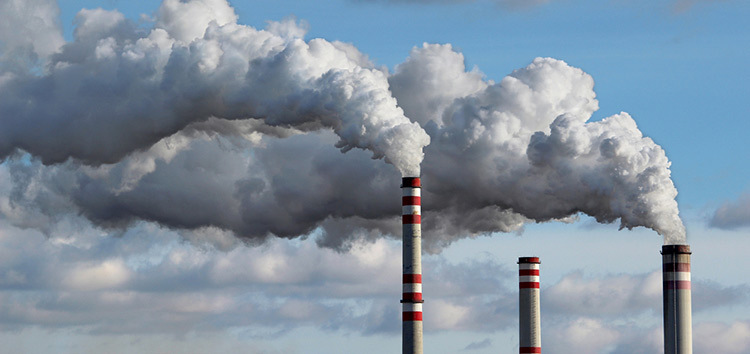
Many of our needs come from factories and it also provides efficient and high quality products. But these factories also bring bad effects to the lives of the majority especially to our nature. In the passing years, where people brings changes in our society, the balance of our eco system is bonign and the living organisms in the environment start to extinct. Our ecological status is critically damaged because of the harmful effect of the human pending activities. We soar to have a good air to breathe, but it is still on the process of going back to the normal stage of having a conditioned atmosphere. In our current condition in our society, one of the significant environmental issue we face is the disadvantage of industrialization in our community.

With the coming of the Industrial Revolution, humans were able to advance further into the 21st century. Technology developed rapidly, science became advanced and the manufacturing age came into view. With all of these came one more effect, industrial pollution. Earlier, industries were small factories that produced smoke as the main pollutant. However, since the number of factories were limited and worked only a certain number of hours a day, the levels of pollution did not grow significantly. But when these factories became full-scale industries and manufacturing units, the issue of industrial pollution started to take on more importance.

            Any form of pollution that can trace its immediate source to industrial practices is known as industrial pollution. Most of the pollution on the planet can be traced back to industries of some kind. In fact, the issue of industrial pollution has taken on grave importance for agencies trying to fight against environmental degradation. Countries facing sudden and rapid growth such industries are finding it to be a serious problem which has to be brought under control immediately. Industrial pollution takes on many faces.

 It contaminates many sources of drinking water, releases unwanted toxins into the air and reduces the quality of soil all over the world. Major environmental disasters have been caused due to industrial mishaps, which have yet to be brought under control. Below are a few of the causes of industrial pollution that have resulted in environmental degradation.

The ecosystem has been significantly impacted because of pollution, and the consequence will affect many future generations. Big industries and manufacturing plants use significant amounts of water from nearby lakes, rivers, and oceans to operate. During the manufacturing process, the water is exposed to chemicals, heavy metals, organic sludge, and radioactive waste. That water is then dumped back into its original water source. Not only does this process affect the plants, animals, and insects in their habitat, farmers also use that water for irrigation, causing harmful effects to the food we eat. Water pollution has caused many different groundwater sources to be labeled as unsafe for people and animals alike. Once it is rendered dangerous, the only use for that water is for it to be reused in the plants that initially harmed it.

Industrial pollution continues to cause significant damage to the earth and all of its inhabitants. It disrupts natural habitats and rhythms, affecting wildlife and ecosystems. Animals are becoming extinct, and habitats are being destroyed. Pollution is the culprit for oil spills and radioactive material leaks, and both of those types of disasters take years to decades to clean up.

Reducing Industrial Pollution

As the harmful effects of industrial pollution increase, there are many agencies and individuals who are working to reduce carbon footprints and live and work eco-friendlier. Here are some of the different steps being taken to reduce and eliminate pollution:

  • Development of better technology for waste disposal.
  • Increased recycling efforts.
  • Development of cooling rooms or bins that allow industries to recycle the water they need instead of pushing it back into the natural water source it came from.
  • Adopting organic water and soil cleaning methods, like using microbes that feed off of metal and waste.
  • Creating policies that prevent land misuse.

REFERENCE AND CITATION (External Link Included)

1. Conserve Energy Future (www.conserve-energy-future.com/causes-effects-of-industrial-pollution.php)

2. Conservation Institute (www.conservationinstitute.org/industrial-pollution/)