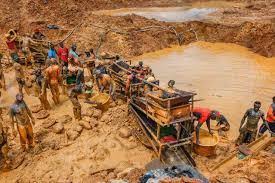
Destructive cases of illegal mining across the world
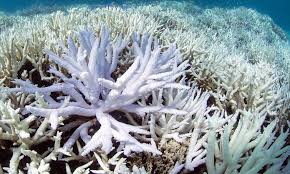
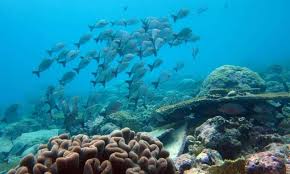
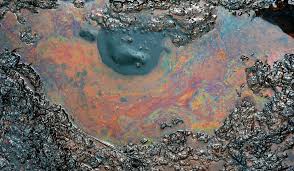
In South America, the $2.4 billion illegal gold mining industry has been destroying the Amazon and costing dozens of lives. In Peru, Bolivia, and Colombia, illegal gold mining operations by private companies have devastated local communities. The operations have left behind pools of cyanide and mercury, twice the size of Olympic swimming pools. In just three months, the illegal mining activities damaged the ecosystem by killing the entire fish population of the Aguita River after water-pumping machines leaked toxins into the water.
According to Colombia’s National Planning Department, Colombia now ranks second in the world for mercury pollution. Local populations have reported health issues related to mercury poisoning such as tremors and memory loss. According to some sources, illegal mining companies often extorted the local populations by forcing them to search for gold by sending in armed groups to intimidate them. Other times, they tried to barter deals by promising to repair crippling infrastructure in the region, but instead, pillaged the region and left without keeping their word. South America isn’t the only region that has suffered from illegal mining.In Africa, the conflict diamond industry cost thousands of lives in the 1990’s and 2000’s. During that time, the illegal industry produced billions of dollars which were used to fund civil wars that decimated countries including Sierra Leone, Angola, Liberia, Ivory Coast and the Democratic Republic of Congo (DRC).
Reference and Citation: Greentumble
(https://greentumble.com/the-dangerous-effects-of-illegal-mining/)
Mining can be defined as “the extraction of minerals and other geological materials from the earth.” Minerals and materials commonly targeted by mining include: base metals (e.g., copper, nickel), precious metals (e.g., gold, silver), iron, uranium, coal, diamonds, limestone, oil shale, rock salt, and potash. The activity is deeply entwined with human history, with the oldest known mine dating back to over 40,000 years ago.
Mining is widely recognized as carrying significant risks of ecosystem destruction, environmental pollution, and worker injury, so “illegal mining” can be defined statutorily as violations of both specialized laws and regulations for mining, and more general laws and regulations that protect the environment and human welfare. From a more biocentric or ecocentric philosophical perspective, even statutorily legal mining might be considered a crime as minerals and other geological materials are nonrenewable, their mining can seriously impact the environment, and many minerals and materials are not recycled, even though they often can be. However, for the rest of this primer, I’ll just consider ‘illegal mining’ from a statutory, rather than philosophical, perspective.
Reference and Citation: Sustainably Enforced
Writer credits: Mark Gibson ( In-Focus:Illegal Mining Around the Globe)
(https://www.sustainablyenforced.org/news-and-analysis/globalillegalmining)
Adorning oneself with jewelry especially gold has been consistent across religions, cultures, class and gender. Unquestionably humans have a need for jewelry, but what precisely is this need?
Jewelry has served as a store of value to be converted to cash in times of need.Many individuals, institutions and countries across the world hold investments in gold bullion as financial backing.
Mining involves the activity, occupation and industry concerned with the extraction of minerals from the earth.
From electronic manufacturing companies to dental rooms gold and other precious metals are being used for various purposes. Gold has a positive impact on a nation’s GDP and it also create job opportunities for the community.In Ghana,the Mining industry accounts for 5% of the country’s GDP and minerals takes up 37% of the total export with gold accounting for 90% of the mineral export. Ghana is the second largest gold producer in Africa.
Notwithstanding the fact that the mining sector contributes to government revenue it also has serious negative impact on the environment and to miners.
The illegal mining sector in Ghana is plagued by several environmental and health problems. Several accidents have occurred and in some cases this has led to fatalities in the mines. In April 2013, at least 17 people were killed while mining illegally at a disused gold mine in Ghana’s central region. The ground caved in on the miners as they searched for gold deposits. Another serious impact is the health hazards as a result of pollution from gases, noise, dust and polluted water.
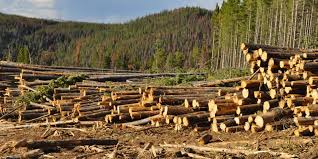
Coal mines release methane which can pollute the air.Sulphuric acid are utilized in the mining operations which drain into the water bodies, and adversely affect ground water. The movements of rock in the case of surface mining impact the land negatively. Craters are left in the areas where mining activities took place, destroying landscape and lush vegetation in the process. Deforestation is resulting in changes in the ecosystem which includes increasing the levels of Carbon Dioxide in the air.
Reference (External Link) (https://www.eoi.es/blogs/mavisasare/2014/01/14/illegal-mining-and-the-environment-%E2%80%93-ghana/)